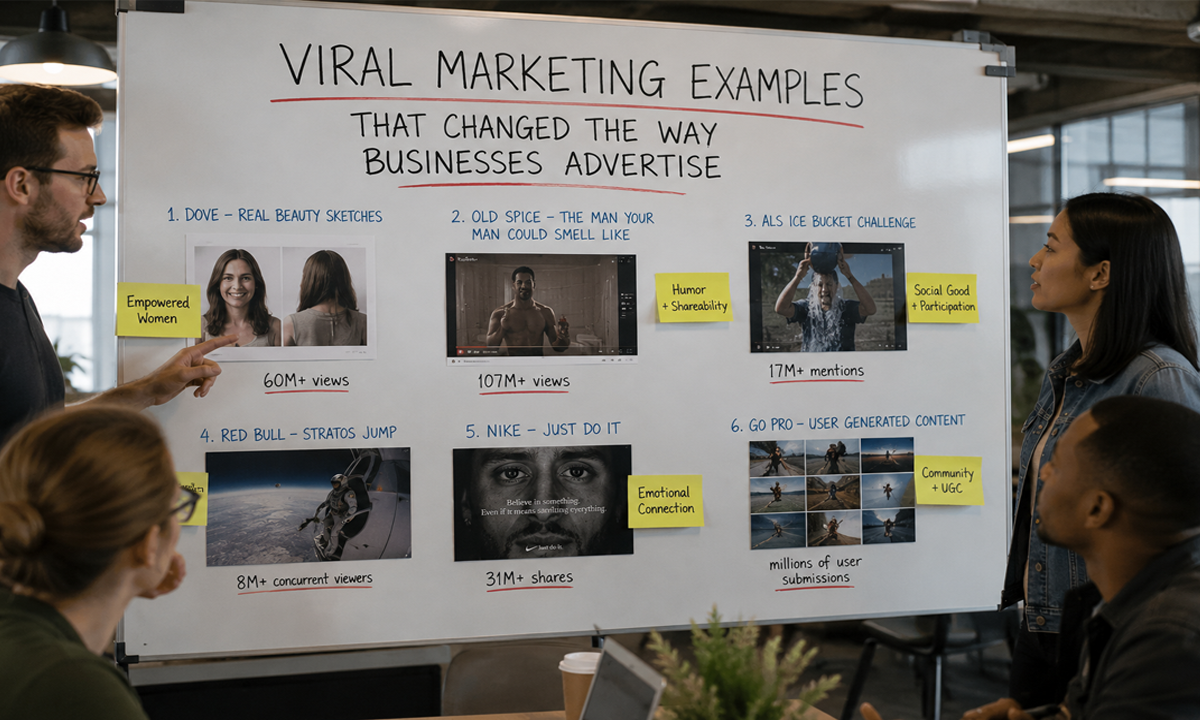
When people think about viral marketing, they often imagine a lucky video or social media post that suddenly gains millions of views overnight. While luck can certainly play a role, some of the most successful viral marketing campaigns in history were carefully planned and strategically executed.
Studying viral marketing examples can help businesses understand what works, why it works, and how similar principles can be applied to their own marketing efforts.
The Ice Bucket Challenge
One of the most famous viral marketing campaigns of all time was the Ice Bucket Challenge.
Participants poured buckets of ice water over themselves, posted videos online, and challenged others to do the same. The campaign spread rapidly across social media platforms, attracting participation from celebrities, athletes, politicians, and ordinary individuals.
What made the campaign so successful?
First, it was simple. Anyone could participate.
Second, it was visual. Watching people react to freezing water created entertainment value.
Third, it encouraged direct participation. People weren’t merely watching content; they were becoming part of the movement.
Most importantly, it supported a meaningful cause, giving participants a reason to share beyond entertainment alone.
Blendtec’s “Will It Blend?”
Few people expected a blender company to become a viral marketing success story.
Yet Blendtec transformed its brand visibility by creating a simple video series called “Will It Blend?”
The videos featured unusual objects being placed inside blenders, including golf balls, smartphones, and various household items.
The concept was straightforward, entertaining, and memorable. Millions of viewers watched as the company demonstrated the power of its products in a way that traditional advertising never could.
Dollar Shave Club
Before becoming a major player in the grooming industry, Dollar Shave Club launched a humorous video introducing its subscription service.
The video was funny, direct, and highly shareable.
Rather than focusing on product specifications, it focused on personality and entertainment.
The result was immediate attention, millions of views, and rapid customer growth.
This campaign demonstrated that audiences often respond more positively to humor and authenticity than to polished corporate messaging.
Old Spice’s Reinvention
Old Spice was once viewed as a traditional brand associated with older consumers.
Through a series of humorous and unconventional commercials, the company completely changed public perception.
The campaign combined humor, fast-paced storytelling, and social media engagement.
Consumers shared the content because it entertained them, not because it felt like an advertisement.
This shift helped reposition the brand for younger audiences and significantly increased visibility.
Why These Campaigns Worked
Although these campaigns were different, they shared several common characteristics:
- Simplicity
- Emotional engagement
- Shareability
- Strong storytelling
- Audience participation
- Memorable experiences
None relied solely on product promotion.
Instead, they focused on creating content that audiences wanted to discuss and share.
Lessons for Small Businesses
Small businesses often assume viral marketing is only available to large corporations with substantial budgets.
The truth is that many viral campaigns succeed because of creativity rather than financial resources.
Businesses can improve their chances of success by:
- Creating memorable experiences
- Encouraging participation
- Solving problems creatively
- Using storytelling
- Delivering emotional value
Focus on Relationships, Not Views
Many marketers become obsessed with view counts.
However, the ultimate goal of viral marketing should not simply be visibility.
Effective campaigns create relationships.
A million views may generate temporary attention, but loyal customers generate long-term growth.
Businesses should focus on creating content that builds trust and encourages ongoing engagement.
Final Thoughts
The best viral marketing examples demonstrate that successful campaigns are rarely random. They combine creativity, emotional connection, audience participation, and strategic execution.
By studying these examples, businesses can learn valuable lessons about creating content that attracts attention, encourages sharing, and supports long-term growth.
Free Marketing Resources
Want more practical marketing ideas?
Download our free reports covering AI marketing, online visibility, and content creation strategies designed to help businesses attract more attention and grow their online presence.