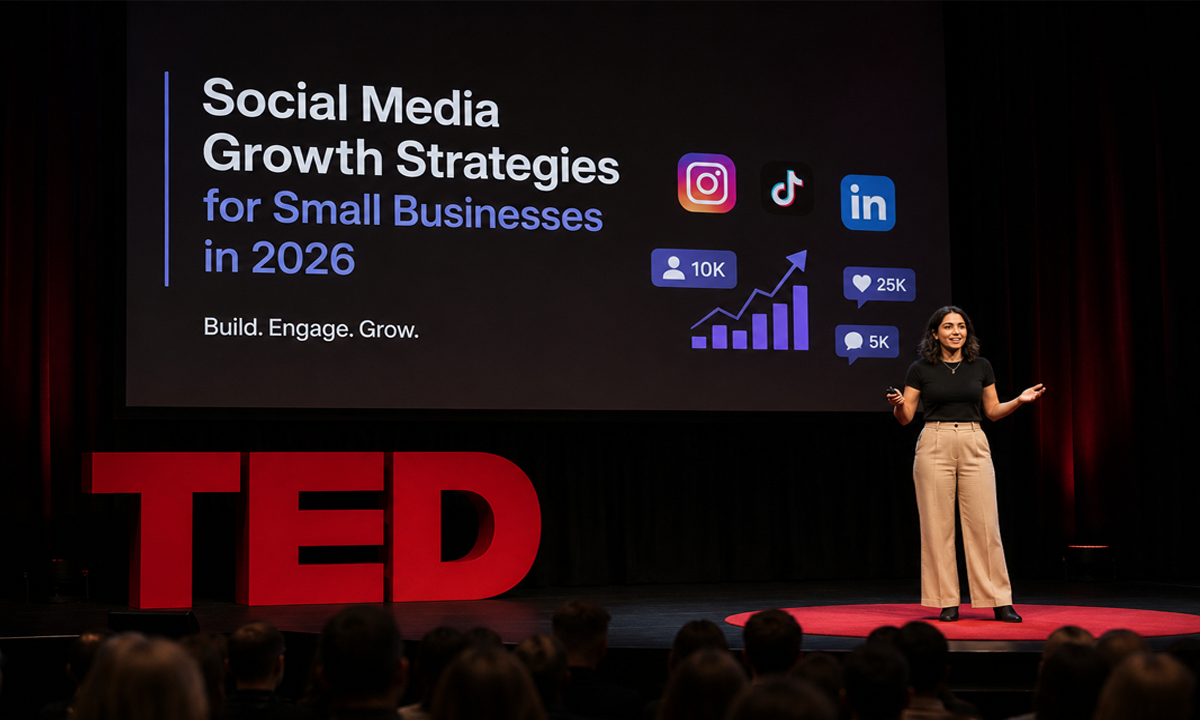
For small businesses, social media has become one of the most powerful marketing tools available. Unlike traditional advertising, social media allows businesses to build relationships, increase visibility, and generate leads without enormous marketing budgets.
The challenge is that competition has never been greater. Millions of businesses are competing for attention every day.
The good news is that growth remains possible for businesses that approach social media strategically.
Define Your Audience First
Many businesses attempt to attract everyone. The most successful businesses focus on attracting specific audiences.
Ask yourself:
- Who is my ideal customer?
- What problems do they face?
- What questions do they ask?
- Which platforms do they use most often?
The more clearly you understand your audience, the easier it becomes to create content that resonates.
Choose Platforms Strategically
Not every platform is right for every business.
For example:
- LinkedIn works well for professional services.
- Facebook remains valuable for community engagement.
- Instagram emphasizes visual content.
- YouTube excels at education and authority building.
- TikTok favors short-form entertainment and educational videos.
Rather than trying to dominate every platform, focus on one or two and build momentum.
Create Content Pillars
Content pillars help maintain consistency.
Examples include:
- Educational content
- Industry news
- Customer success stories
- Behind-the-scenes updates
- Frequently asked questions
These pillars provide a framework for ongoing content creation.
Use Video Whenever Possible
Video continues to dominate social media engagement.
Businesses do not need expensive production equipment.
Authenticity often performs better than perfection.
Simple videos that educate, solve problems, or answer common questions can attract significant engagement.
Encourage User Interaction
Every post should have a purpose.
- Ask questions.
- Invite opinions.
- Encourage feedback.
- Request experiences.
Engagement signals tell algorithms that content is valuable and worthy of additional visibility.
Repurpose Content
Creating content takes time.
One article can become:
- Several social media posts
- A short video
- An infographic
- A podcast discussion
- An email newsletter
Repurposing content increases efficiency and expands reach.
Track Performance
Growth requires measurement.
Review analytics regularly.
Identify:
- Top-performing content
- Audience demographics
- Engagement trends
- Posting times
These insights help improve future performance.
Final Thoughts
Social media growth for small businesses is not about chasing trends or posting constantly. It is about consistently delivering value, understanding your audience, and building meaningful relationships that drive long-term business growth.
Free Marketing Resources
Want more practical marketing ideas?
Download our free reports covering AI marketing, online visibility, and content creation strategies designed to help businesses attract more attention and grow their online presence.